NORBURY WHARF LIMITED

NORBURY WHARF LIMITED
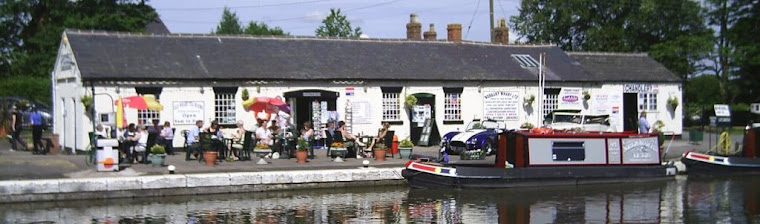
Shop front in the summer

Thursday, 23 May 2019

From the Mediterranean to the English Channel by boat Episode 6


MANUAL LOCKS – AND A CLASH WITH A FRENCH BARGEE

Simon Jenkins is a well known figure on the British canal system and has been a boater for decades, living on, working and owning boats and, for the last couple of decades, the managing director of Norbury Wharf on the Shropshire Union Canal.


He is just back from the boat buying trip of a lifetime, bringing his first historic barge back to Belgium, the country in which it was built, from the shores of the Mediterranean. Last month he met old friends, and avoided crushing a mad Englishman. Now he comes up against manual locks which take him onto another of Europe’s major waterways and an angry Frenchman. This is his story, in his own words.

So we are now heading downhill and are following the river Moselle, at some point and I cant remember when the locks went from automated to manual. Sacre bleu I thought – I am now thinking in French, of course - but to my amazement they all had lock keepers. Some were students doing summer work and others were full time lock keepers who were mobile, so drove to the next lock to get it ready. I was liking this.

A bit of industry started to occupy the canal and then the first commercial boats we had seen since leaving the Saône. These were purpose built ones used over short distances, unlike the large ones we had been used to seeing with their wonderful rear cabins and cars plonked on top.
Boats with wonderful rear cabins and cars plonked on top

They were being employed on what appeared to be an aggregate job, it must have been the weekend as there was no sign of life, or maybe it was their lunch time, which seems to start at about 10am and finish at about 3pm. Well that’s what it seemed like! The canal becoming industrial and built up was quite a nice change after being out in the countryside for ages, it made a nice contrast.

It wasn't long before we were back out in the sticks, though, not a very  exciting canal and nothing really notable. We crossed the river Moselle on a modern looking aqueduct, then through yet another lock and, all of a sudden, I noticed that we were picking up speed, we now had part of the river Moselle with us. That didn't last long - another lock and back to ditch crawling - but things were changing.

As we progressed the river came in and out of the canal, it was getting wider and our pace had picked up and then we locked through a small lock and into what seemed like another world.

Straight in to a huge inland port surrounded by ships and huge barges just like the ones we had seen on the Rhone. We progressed past the vast steel works with their loading bays and railway lines, more aggregate loading wharves, and giant gantry cranes with huge magnets unloading barges full of scrap. We had reached the river Moselle and its inland ports.
Giant gantry cranes with huge magnets unloading barges

Aggregate work

We only had a short journey to do on this mighty river. The lock keeper called us in once he had cleared a commercial tug and advised us to move down river to a small jetty where we should stay the night.

So out onto the Moselle – 152 km long with 16 locks, each 172 m x11 m, fortunately we would only be doing a short stretch and a couple of locks, we passed through the large lock and on to the main river and carried on our way to the mooring that was suggested, no other places to tie up between the two locks anyway.

The mooring soon came in to sight and there was a French barge already on the mooring, no problem we shall pull alongside, something customary over in France where a boat tied to the bank is considered to be part of the bank therefore another boat is allowed to tie alongside.
There was a French barge already on the mooring

Not in this instance, a vile French couple came out shouting at us in French "Vous ne pouvez pas amarrer votre bateau à côté de mon bateau, cochons anglais. Je me fiche de savoir si vous avez l'autorisation du gardien de l'écluse. Il est probablement aussi cochon anglais. Allez amarrer votre bateau ailleurs chez vous. Porcs anglais, je vais couper vos cordages. si vous essayez de vous amarrer à côté de moi!

A rough translation sounds a bit Monty Python: “
You can not dock your boat next to my boat, English pigs. I do not care if you have permission from the lock keeper. He is probably also an English pig. Go moor your boat elsewhere at home. English pigs, I will cut your ropes. if you try to moor beside me! "

It was like a scene from Trafalgar but without the cannons, oh and no Nelson. We told them that we had been instructed to stay there, but they were having none of it, so, for a quiet night, we carried on to the next lock as the sun was setting.
That bit of the river is outstandingly beautiful

I am glad we did, as that bit of the river is outstandingly beautiful and in the early evening as the sun was going down it was even more spectacular. We were shrouded in the most amazing deep wooded valley with trees hundreds of feet up the valley sides and right down to the waters edge. Every bend the river opened up a more dramatic vista.

We eventually tied up at the lock side in a most peaceful place. The next morning we were up early and met by mist over the water and hanging in the trees. This was a really magical place.
This was a really magical place.

We soon passed through the lock and we carried on to Toul where the navigation split into three sections - the main river went right, a larger canal in the middle and a smaller one to the left. We took the smaller one as we could see on our maps that there was a good stopping place at an old factory which also gave direct access to the road and some shops, we stopped to do some more essential shopping at a nearby supermarket.

Once the shopping was complete it was off again, through a small lock and on to a short section of canal where we came to a junction with the Canal de la Marne au Rhin on our left hand side and that would lead us back on to small canals.

There was a bit of a commotion when another Eric Sykes sort of chap was flailing about in the middle of the junction asking for help, we managed to take a rope off him and help him to the other side of the junction, his engine had failed - good deed done for the day!

In the next episode: The end of the first leg is in sight but there is ugly industry and the beautiful Ardennes to enjoy first.

Thursday, 25 April 2019

From the Mediterranean to the English Channel by boat - episode 5


FLAMING JUNE BUT NOT MANY BOATS

Simon Jenkins is a well known figure on the British canal system and has been a boater for decades, living on, working and owning boats and, for the last couple of decades, the managing director of Norbury Wharf on the Shropshire Union Canal.


Simon Jenkins at Norbury Wharf

There he runs a brokerage, hire fleet, day boats, a trip boat and a chandlery, as well as a paint dock, dry dock and full engineering services. Simon has dipped his toe in to the waters of other boat-related ideas including sea-going charters, but the inland waterways are his first love and he has turned his gaze to Europe, with it’s wide waterways and fully functioning system of commercial river and canal navigations. He is just back from the boat buying trip of a lifetime, bringing his first historic barge back to Belgium, the country in which it was built, from the shores of the Mediterranean. Last month he was boarded by armed police as he entered the River Saône. Now he enters a world of locks and tunnels and the obligatory daft Englishman in a GRP boat. There is also a meeting with an old friend. This is his story, in his own words.


The Saône is another river that is a canalised and has sections of lock cuts, something commonplace in France, and in other parts of Europe, and on some parts of the UK system too.

On some of these canalised sections there are tunnels and this was a first for us with this boat. The first one we came was on a traffic lights, we had a short wait whilst another boat was coming the other way and then it was our turn.

It wasn't a long tunnel and dead straight, so nothing to get excited about - but there were more to come! Mile after mile, lock after lock; meandering our way through some stunning countryside and hardly passing other boats.

This was June, and flaming June at that, temperatures were in the high 30s and the canal and rivers seemed so quiet, much quieter than we are used to in the UK. All of a sudden we came to something quite different and a bit challenging.

Now the locks are a tight squeeze – the maximum dimensions are 38 metres by 5 metres

We locked off the river on to another canalised section - this time it was a control lock with a lock keeper, the canal was dead straight and wide enough for two 5M boats to pass so we carried on.

Then the narrows came in to sight, nothing to worry about - except they had been carved out of a hill and it was the entrance to a narrow tunnel, as we went around the bends, slowly, the bow was almost touching the bank at the front whilst the stern was almost touching the opposite side at the rear. I would imagine that a 38 m barge would actually be touching at both ends. We squeezed our way around this bendy section and then plummeted in to a dark cavernous tunnel. Soon we emerged back in to bright sunshine.


Sometimes the canal itself looks too narrow, especially this approach to a tunnel


Bends in a concrete channel can leave only inches as you turn


Then the tunnel – which looks too small to accommodate us


All is going well with the barge, really getting to grips with it, not much traffic about and then in the distance just as we were coming off a river section and heading for a very narrow old flood lock I see a small cruiser approaching.

We are just slowing down from 12kmh and the narrows are fast approaching. All lined up and then the cruiser decided that he is going to go through the narrows first. This guy must have had a death wish, challenging a much larger craft with much less manoeuvrability in a restricted waterway is madness.

Hard astern was all I could do, I managed to keep the boat under control and bring it to almost perfect standstill as he comes flying past us just like Eric Sykes on his plastic cruiser in the film The Barge. To make matters worse he was bloody English. I’m sure he was related to old Sykes!

The river is starting to become much smaller now, narrower and bendier, lots more care is needed going around very tight bends, speed is much slower too, nearly at the end of the navigation for us and then on to a proper canal!

We entered the narrow canal at Corre. This section is 93km long and has 93 locks, so now its going to get even more interesting and really slow our pace down. The locks are now controlled by a remote control - something like a garage door opener.

The locks are now controlled by a remote control - something like a garage door opener


Very amusing indeed. As you approach a lock there is a receiver box somewhere and you have to aim your remote at it and press the button - and hopefully it works and a flashing light appears on the box letting you know it has accepted your signal and the lock is preparing.

As you approach the lock there are traffic lights. Red, well that’s obvious; Red-and green means the lock is setting for you; and green is obvious too. Once in the lock the same procedure as before, two bars, blue to operate the lock and red to stop it.

So off we go, the canal is now a proper canal – shallow and narrow; and progress is slow, but still very interesting indeed. Meeting other boats is now fun and virtually all the locks have a lock keepers cottage on the lock side.

They are pretty places, some are occupied and some are not, especially the more remote ones. You can imagine, in the past, that there would have been a great community feel amongst the boatmen and all the staff running the canals, just like the UK canals would have been years ago.

The canal is mostly rural, passing through small, quiet villages and small towns following the river Le Coney, and we had been climbing the locks steadily until we reached the summit pound.

We were meandering along the summit pound looking for a stopping place rumoured to be close to a Boulangerie (bakery to us) - well when in France one has to have fresh Baguettes everyday - when I saw a petite looking blonde lady waving like mad.

Good God it was Laura, the partner of a chap called Roger Murray. Some of you might recognise his name, he is a proper canal nut and used to own the ex FMC steamer Monarch, also a lovely tug called Kyle. Now he has a Dutch barge in Holland and they were on their way from her pad in Palma driving up to the barge.

Roger Murray, a proper canal nut and used to own the ex FMC steamer Monarch.


It just so happened that their journey coincided with ours so they jumped on board and we had the most pleasant evening in the company of these two wonderful people.

As the spare bed was made up it went without saying that they would dine with us and stay the night and we sat out on the back deck until late, drinking and reminiscing.

The next day saw them come with us and do a few miles and a few locks, we had now started going down the ‘other side’ they departed from us at the junction with the Épinal canal. They got a taxi and we waved them farewell - that was a nice surprise, and a welcome one too.

In the next episode: Simon and his crew come up against manual locks which take them onto another of Europe’s major waterways - and an angry Frenchman

Thursday, 28 March 2019

From the Mediterranean to the English Channel by boat - episode four


NOW FOR THE SAÔNE

Simon Jenkins is a well known figure on the British canal system and has been a boater for decades, living on, working and owning boats and, for the last couple of decades, the managing director of Norbury Wharf on the Shropshire Union Canal.

There he runs a brokerage, hire fleet, day boats, a trip boat and a chandlery, as well as a paint dock, dry dock and full engineering services. Simon has dipped his toe in to the waters of other boat-related ideas including sea-going charters, but the inland waterways are his first love and he has turned his gaze to Europe, with it’s wide waterways and fully functioning system of commercial river and canal navigations. He is just back from the boat buying trip of a lifetime, bringing his first historic barge back to Belgium, the country in which it was built, from the shores of the Mediterranean. Last month we heard how he completed the Rhone despite the winter water levels. Now he is moving ever northwards on the River Saône. This is his story, in his own words.

We emerged from the last lock on the Rhone with some relief. We had made it without incident or accident, the barge had handled perfectly, the engine faultlessly and, apart from the generator battery dying on us and one of the macerator toilets packing up, all was good.


Another pusher tug and its barge, seen from the wheelhouse of Amborix


We still had plenty of food onboard so we could crack on with the next step, the River Saône. As we were passing through Lyon we were told of a good place to buy diesel – the only place as it turned out – and, sure enough, there it was.

A fascinating array of barges, some being worked on, some lived on, one was even being used as a floating dry dock-with another barge half in and half out having a new bottom welded on to it. There, in the middle, was this rather large fuel barge cum chandlery run by a lovely family.

The waterfront in historic Lyon


Passing through the city which clearly enjoys its river

They had been pre-warned of our arrival so we were greeted kindly and we proceeded to fill up with fuel. Our barge holds 4,000 litres of red and 2,000 litres of white, so we filled them to the brim as we did not know where we would find fuel again.

It’s not easy to get fuel in France, it’s not too bad for small boats as some of the marinas sell it, but we cant get into these marinas as we are too big, so you have to be a bit self sufficient and plan ahead.

Leaving Lyon
 

All filled up now, so we carried on the river Saône – and it doesn’t seem that much different to the Rhone to start with, maybe a little smaller, but still a large commercial waterway of 218 km with 5 locks measuring 180m x 12m.


We travelled through Lyon and past all if its wonderful barges and carried on to Saint-Jean-De-Losne where it was planned that we stop for a day or two for our crew, Paul and Mal, to take care of some important business.

This was also where they lived and so we had the use of their car which allowed us to do some much needed shopping for the next leg of the journey.

Moored under the road bridge at Saint-Jean-De-Losne

When we arrived we stopped in the old lock cut and filled our water tank. As with diesel, there aren’t  many convenient places to pick up water, although its free. Still, the boat carries 6,500 litres of fresh water, so it doesn’t need topping up frequently.

Saint-Jean-De-Losne is a lovely place and an important centre for the canals as it is where the Canal Centre Champagne et Bourgogne joins the river Saône and was a very busy inland port.

Our original plan was to use this canal, however a lock on the Ardennes canal had collapsed which would have meant a much longer trip around the stoppage. Instead we carried on the river Saône which would take us to the Canal de Vosges (Canal de L’Est).

Sometimes you are reminded that they do things differently in France and whilst in Saint-Jean-De-Losne we were boarded by the French river police to check our papers and safety equipment. It’s odd having armed police board your boat and it is certainly a contrast with a C&RT number checker on his bike. It was all OK though, and nice guys they were too. They were happy with all of our paperwork and licenses etc. 

Coming into one of the first 'narrow' locks


The Saône is almost two separate rivers. There is the large commercial waterway but, after Saint-Jean-de-Losne, things start to change. This section is 147 km and has 19 locks and soon we came to a small lock, well it was small compared to what we had been used to so far.

These locks are for much smaller boats, although still commercial, they will only accommodate boats of 38 m x 5 m. Now this is starting to get interesting and more like the UK canals.

Our barge is 30 m x 5 m, so squeezing in to these little locks takes some seriously good judgement and a certain amount of skill - none of which I had mastered at that point.

The poor old boat took a bit of a pounding to start with as I was trying to enter the locks with a little speed. I soon found out the only way to do it was at a snails pace. Thankfully I soon got that mastered and after that nearly all the locks were entered just fine.


A misty morning on a village mooring on the River Saone

The upper Saône is lovely. It has a much more intimate feel to it, beautiful views of far-off villages through lovely unspoilt countryside, small towns that flank the banks of the river in places, smaller locks and some have pretty lock keepers cottages.

Most of these locks are semi-manual locks -what is a semi manual lock I can hear you cry?

Well, on the approach to the lock there is something called a twizzle stick. This is a device, usually hanging from a wire strung across the navigation, and, as you approach, you have to turn the stick, or pole, or tube, in order to operate the lock’s automatic system to open the gate.

Once inside the lock there are two bars - one blue, one red, and if you push up on the blue pole and the lock operates automatically, the gates open and off you go to the next lock. In case of emergency then just push the red pole and the whole operation stops.


It makes operating the locks a bit of fun as you have to try and find the swizzle stick on the approach and then place the boat in a position in order for a member of the crew to operate the stick.


In the next episode: A world of locks and tunnels and the obligatory daft Englishman in a GRP boat, as well as a meeting with an old friend


Thursday, 28 February 2019

From the Mediterranean to the English Channel by boat - 3


ONWARDS AND NORTHWARDS

Simon and his partner Amanda


Simon Jenkins is a well known figure on the British canal system and has been a boater for decades, living on, working and owning boats and, for the last couple of decades, the managing director of Norbury Wharf on the Shropshire Union Canal.

There he runs a brokerage, hire fleet, day boats, a trip boat and a chandlery, as well as a paint dock, dry dock and full engineering services. Simon has dipped his toe in to the waters of other boat-related ideas including sea-going charters, but the inland waterways are his first love and he has turned his gaze to Europe, with it’s wide waterways and fully functioning system of commercial river and canal navigations. He is just back from the boat buying trip of a lifetime, bringing his first historic barge back to Belgium, the country in which it was built, from the shores of the Mediterranean. Last month he entered the mighty River Rhone and braved the narrows. Now he is to meet some big locks and big boats. This is his story, in his own words.

The navigable river Rhone stretches from Lyon in central France to the Mediterranean sea. It is 325km long and has 12 massive locks, it travels along the Rhone valley through some spectacular places like Avignon, Chateauneuf-du-Pape, Valence, Vienne, and Lyon.
Wine country

Wine terraces
 
As well as being a very important commercial route it also plays an important role in generating electricity in the form of hydro electric power plants at every lock. The locks themselves are all pretty much in canalised sections of the main river. These tend to be narrower than the river and as they also have a hydro plant at the end and this can mean even more strong currents.

We had to pick our timings, as best we could, to avoid peak generating times – morning, lunch and evening - when the plants could be operating at maximum potential.

This means letting a tremendous amount of water through the generators, slowing our progress down to 4 or 5 kmph, grindingly slow, and always a relief to get in to the lock.
Hydro-electric generation plant at a Rhone lock
The biggest lock we did was Bollene lock, measuring a massive 190 m long, and 12 m wide, with an impressive drop of 23 m. As we were going uphill I think we got the best and most impressive view. It was like a cathedral of locks, a massive, cold and a dank damp place to be.


As we entered the lock we made our way on our, now apparently tiny little boat, towards the front, secured our lines to the massive floating bollards sunk in to the lock walls and waited.
Bollene lock

Entering the lock

Big gates
As I looked back out of the wheel house I was greeted by the width of the lock starting to fill with a hotel ship, its huge bow and beam occupying the lock with inches to spare.

It loomed up on us and almost over hung the stern of our boat. We were close enough to speak with some of the guests onboard who were just finishing breakfast. As they looked down on us we must have seemed like ants on a bit of a branch clinging to the lock sides.

The lock was very gentle as it filled, and in no time at all we were all at the top, gates open, green lights and off we go again.
Hotel ship entering behind us

Hotel ship goes on its way
 

There are not that many places to stop along the river - but there were some fascinating places we would love to have lingered. However, as we were on a schedule on our journey we couldn't take advantage and most nights we ended up moored above a lock.

Not ideal moorings, as they were mostly on what is called ‘dolphins’ which are bloody great steel tubes sunk in to the bed of the river, some without any shore access. As the commercial boats could work 24 hours a day, the wash from them made for an unpleasant nights sleep, with the ropes creaking and heaving as loaded barges and hotel ships went past.

We eventually made the last narrow point of our journey at a place called the Medeterean bridge at Givors, which was also one of the longest lock cuts, or diversions as they are also known, on our route.

We had been watching the flow rates increase day by day as the North had rain and the snow in the Alps kept melting. As we were travelling North things were getting quite bad and there was even the prospect that we could have been stuck on the river, as it could be closed to navigation for safety reasons.

By now there was plenty of flotsam and jetsam coming down the brown and dirty river so we tied up on a handy pontoon just before the bridge and decided to wait 24 hours to see if the flow would subside a little.

I phoned and spoke with the previous owner and he said that he would never have attempted to go through that bridge with the flow as strong as it was, even though he had confidence in the boat being able to do it.

We waited 24hours with the rushing water around our bows-and the flotsam and jetsam getting caught under the pontoon. I was starting to get concerned as we watched big commercial barges and hotel boats come past us sideways around the bends, taking up the entire width of the river at up to 20 kmph, and then the very rare barge pushing against the flow at 5 kmph.

Large pusher tug on the fast-flowing Rhone

Tug without its barges


In the end, that little barge that we had overtaken right at the start of our journey on the Petite Rhone came chugging past us. We watched him for about half an hour as he pushed against the flow.

Paul radioed the guy who turned out to be Dutch, he said that he had done this journey several times and, although the flow was stronger than normal, he was happy enough to push on.

Small barge pushing the flow
I had total confidence in our barge and the engine, so the decision was made, and we set off shortly afterwards. We untied from the pontoon and crabbed out sideways and in to the flow of the river.


We maintained 4 or 5 kmph all the way until the lock came in to view and we slipped inside our last lock on the River Rhone. Not being foolhardy, and having experienced just what a powerful river we were navigating, we all had lifejackets available, and we had two half ton anchors ready to be deployed in an emergency. You don’t tackle these conditions lightly! 


In the next episode: Thousands of litres of diesel, boarded by armed police and a stoppage forces a route change.