NORBURY WHARF LIMITED

NORBURY WHARF LIMITED
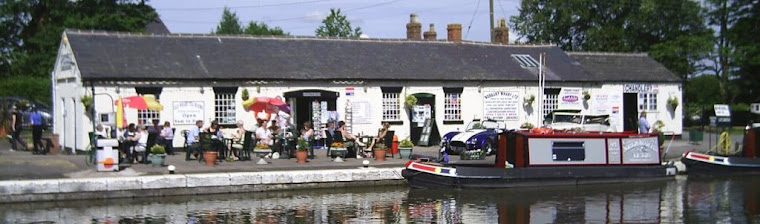
Shop front in the summer

Thursday, 28 February 2019

From the Mediterranean to the English Channel by boat - 3


ONWARDS AND NORTHWARDS

Simon and his partner Amanda


Simon Jenkins is a well known figure on the British canal system and has been a boater for decades, living on, working and owning boats and, for the last couple of decades, the managing director of Norbury Wharf on the Shropshire Union Canal.

There he runs a brokerage, hire fleet, day boats, a trip boat and a chandlery, as well as a paint dock, dry dock and full engineering services. Simon has dipped his toe in to the waters of other boat-related ideas including sea-going charters, but the inland waterways are his first love and he has turned his gaze to Europe, with it’s wide waterways and fully functioning system of commercial river and canal navigations. He is just back from the boat buying trip of a lifetime, bringing his first historic barge back to Belgium, the country in which it was built, from the shores of the Mediterranean. Last month he entered the mighty River Rhone and braved the narrows. Now he is to meet some big locks and big boats. This is his story, in his own words.

The navigable river Rhone stretches from Lyon in central France to the Mediterranean sea. It is 325km long and has 12 massive locks, it travels along the Rhone valley through some spectacular places like Avignon, Chateauneuf-du-Pape, Valence, Vienne, and Lyon.
Wine country

Wine terraces
 
As well as being a very important commercial route it also plays an important role in generating electricity in the form of hydro electric power plants at every lock. The locks themselves are all pretty much in canalised sections of the main river. These tend to be narrower than the river and as they also have a hydro plant at the end and this can mean even more strong currents.

We had to pick our timings, as best we could, to avoid peak generating times – morning, lunch and evening - when the plants could be operating at maximum potential.

This means letting a tremendous amount of water through the generators, slowing our progress down to 4 or 5 kmph, grindingly slow, and always a relief to get in to the lock.
Hydro-electric generation plant at a Rhone lock
The biggest lock we did was Bollene lock, measuring a massive 190 m long, and 12 m wide, with an impressive drop of 23 m. As we were going uphill I think we got the best and most impressive view. It was like a cathedral of locks, a massive, cold and a dank damp place to be.


As we entered the lock we made our way on our, now apparently tiny little boat, towards the front, secured our lines to the massive floating bollards sunk in to the lock walls and waited.
Bollene lock

Entering the lock

Big gates
As I looked back out of the wheel house I was greeted by the width of the lock starting to fill with a hotel ship, its huge bow and beam occupying the lock with inches to spare.

It loomed up on us and almost over hung the stern of our boat. We were close enough to speak with some of the guests onboard who were just finishing breakfast. As they looked down on us we must have seemed like ants on a bit of a branch clinging to the lock sides.

The lock was very gentle as it filled, and in no time at all we were all at the top, gates open, green lights and off we go again.
Hotel ship entering behind us

Hotel ship goes on its way
 

There are not that many places to stop along the river - but there were some fascinating places we would love to have lingered. However, as we were on a schedule on our journey we couldn't take advantage and most nights we ended up moored above a lock.

Not ideal moorings, as they were mostly on what is called ‘dolphins’ which are bloody great steel tubes sunk in to the bed of the river, some without any shore access. As the commercial boats could work 24 hours a day, the wash from them made for an unpleasant nights sleep, with the ropes creaking and heaving as loaded barges and hotel ships went past.

We eventually made the last narrow point of our journey at a place called the Medeterean bridge at Givors, which was also one of the longest lock cuts, or diversions as they are also known, on our route.

We had been watching the flow rates increase day by day as the North had rain and the snow in the Alps kept melting. As we were travelling North things were getting quite bad and there was even the prospect that we could have been stuck on the river, as it could be closed to navigation for safety reasons.

By now there was plenty of flotsam and jetsam coming down the brown and dirty river so we tied up on a handy pontoon just before the bridge and decided to wait 24 hours to see if the flow would subside a little.

I phoned and spoke with the previous owner and he said that he would never have attempted to go through that bridge with the flow as strong as it was, even though he had confidence in the boat being able to do it.

We waited 24hours with the rushing water around our bows-and the flotsam and jetsam getting caught under the pontoon. I was starting to get concerned as we watched big commercial barges and hotel boats come past us sideways around the bends, taking up the entire width of the river at up to 20 kmph, and then the very rare barge pushing against the flow at 5 kmph.

Large pusher tug on the fast-flowing Rhone

Tug without its barges


In the end, that little barge that we had overtaken right at the start of our journey on the Petite Rhone came chugging past us. We watched him for about half an hour as he pushed against the flow.

Paul radioed the guy who turned out to be Dutch, he said that he had done this journey several times and, although the flow was stronger than normal, he was happy enough to push on.

Small barge pushing the flow
I had total confidence in our barge and the engine, so the decision was made, and we set off shortly afterwards. We untied from the pontoon and crabbed out sideways and in to the flow of the river.


We maintained 4 or 5 kmph all the way until the lock came in to view and we slipped inside our last lock on the River Rhone. Not being foolhardy, and having experienced just what a powerful river we were navigating, we all had lifejackets available, and we had two half ton anchors ready to be deployed in an emergency. You don’t tackle these conditions lightly! 


In the next episode: Thousands of litres of diesel, boarded by armed police and a stoppage forces a route change.

Saturday, 26 January 2019

From the Mediterranean to the English Channel by boat - 2


2. ONTO THE RHONE


Simon Jenkins is a well known figure on the British canal system and has been a boater for decades, living on, working and owning boats and, for the last couple of decades, the managing director of Norbury Wharf on the Shropshire Union Canal.

Simon Jenkins and his partner Amanda


There he runs a brokerage, hire fleet, day boats, a trip boat and a chandlery, as well as a paint dock, dry dock and full engineering services. Simon has dipped his toe in to the waters of other boat-related ideas including sea-going charters, but the inland waterways are his first love and he has turned his gaze to Europe, with it’s wide waterways and fully functioning system of commercial river and canal navigations. He is just back from the boat buying trip of a lifetime, bringing his first historic barge back to Belgium, the country in which it was built, from the shores of the Mediterranean. Last month we told how he bought the barge and began the journey north from the Mediterranean. Now he is about the tackle the mighty Rhone. This is his story, in his own words
.


We watched the flow rates intensively, knowing the river was higher and faster than most years, with the help of a very useful website giving all of the technical data  for the river.
Just leaving the Petite Rhone with the main river ahead


Despite that, we had to make a decision and we made the choice that we would go. Now we were on the Petite Rhone before it joined the main Rhone river several kilometres further on. Once on the main channel we knew the worst section was a narrow bridge at Beaucaire. 

After leaving the first lock the Petite Rhone seemed quite calm, not flowing especially fast giving me some comfort that this mighty river was a just pussy cat after all.Then we reached the confluence with the Rhone main river. 

Gulp. This was no pussy cat, more of a raging Lion. It was massive and you could clearly see the swirls, the eddies, the whirlpools, as the current ripped onwards.

Our first view of the Rhone

Now, we could have turned back, but we carried on; this was clearly not going to be a gentle ‘walk in the park,’ although we took heart from the fact we had just passed another smaller barge heading upstream and at a much slower pace than ourselves.We thought if they can do it then so can we! 

So we crossed the giant river and over to our side of the navigation as I didn’t want to meet anything big coming down the middle of the river, potentially doing over 20 kmph. This part of the Rhone is also used by big ships that don’t hang about, so it was important they we stay vigilant at all times.
A commercial barge – they are a bit big.

And another

And another

Our vessel has to have something called AIS which shows the position of our boat and means we can also see the position of other boats that have AIS. For boats over a certain length on the European inland waterways this is mandatory and, if I am honest, I wouldn’t venture on to a commercial waterway without it. 

This device is a godsend as you can see ships well before they can be seen by eye and this gives you, and them, a chance to alter course to be safe and make best use of the river.

Boats over a certain size have to have something called a ‘blue board’ too, and/or an oscillating white light. This is to give approaching vessels a signal that you intend to pass their boat on the starboard side when normally it would be on the port side, especially useful when travelling against a flow and you need to take full advantage of the slack water which may be on the opposite side of the navigation channel. 

The first time we were ‘blue boarded’ was a bit of a hair raiser, having never done it before, but once done and understood it was no problem, and we even did it to much larger vessels if it made sense for us to do so. We carried on against the flow, making very slow progress, around 7 kmph, until we could see the bridge at Beaucaire where we knew that the flow would be at its strongest.
The current on the Rhone takes no prisoners

If anything went wrong as we were going through the bridge we could sink. if the engine had failed we would be swept sideways, pinned against the bridge abutments, capsize and sink. So it was a nerve racking few minutes as we entered the bridge.

I have it on video as it was quite dramatic, the speed reduced to just 2 kmph as we inched trough the bridge-the engine now on full power. All 160HP turning the giant four blade propeller, pushing the 130 ton barge against the flow of water.
Approaching the bridge at Beaucaire

The current was ripping past our vessel as we inched through at a snails pace, I was concerned that we would end up going backwards, fearing we hadn’t got enough power to push against the flow, but the old barge kept moving, ever so slowly, forward.

Then the speed started to increase kilometre by kilometre until we were back to our 7 kmph cruising speed, hugging the tree lined banks to stay in the slack water, looking for the shortest way around the bends to optimise the flow and shortest route - by no means an easy feat and requiring a lot of concentration.


In the next episode: Big locks, big boats and the problem with locks that generate electricity.


This series of articles can also be found in Towpath Talk newspaper every month this year.


Wednesday, 2 January 2019

From the Mediterranean to the English Channel by boat - 1

1. HOW THE HUNT BEGAN


Simon Jenkins. managing director
of Norbury Wharf
Simon Jenkins is a well known figure on the British canal system and has been a boater for decades, living on, working and owning boats and, for the last couple of decades, the managing director of Norbury Wharf on the Shropshire Union Canal.

There he runs a brokerage, hire fleet, day boats, a trip boat and a chandlery, as well as a paint dock, dry dock and full engineering services. Simon has dipped his toe in to the waters of other boat-related ideas including sea-going charters, but the inland waterways are his first love and he has turned his gaze to Europe, with it’s wide waterways and fully functioning system of commercial river and canal navigations. He is just back from the boat buying trip of a lifetime, bringing his first historic barge back to Belgium, the country in which it was built, from the shores of the Mediterranean. This is his story, in his own words.


It started as an idea back in 2015 - let’s branch out and buy boats on the continent to refurbish and resell. Norbury is pretty much at full potential now so we were on the lookout for other business ventures and the hunt for suitable boats started.

For months, we looked at many online, watched the markets and researched the subject as thoroughly as possible, talking to anyone with an insight into the European boat market.
Ambiorix sat on its permanent mooring in Aigues-Mortes- when we first
viewed the boat on a winters day in December 2017

In the end we found what appeared to be the perfect candidate for the project. It was a 100ft by 16.5ft, 130 ton Belgium-built barge, very similar to a Dutch Luxe-motor, built in 1911.

It had been owned and lived on by the previous owner for 27 years and was in need of some modernisation, so after negotiations we ended up purchasing it,

Now we owned the Ambiorix, named after a great Belgium King who did serious damage to the occupying Romans around the time that Caesar invaded Britain.
The boat sometime in the early eighties in its unconverted state

Now all this sounds straightforward, but there was one small hurdle to jump - the boat was based in a small town called Aigues-Mortes in the South of France which is just a few Kilometres from the Mediterranean sea. In fact the canal was connected directly with the sea at a lovely sea port called Le Grau-du-Roi.
It’s not always sunny on the Mediterranean, this was just after we returned to the UK in Feb 2018,
 when the previous owner was keeping his eye on the boat for us

This wonderful area of the South of France, known as the Camargue, is a beautiful place, full of pink flamingoes, white horses, and beaches, but not really suitable for what we wanted to do with a barge.
The famous white horses, seemingly wild and allowed to wonder freely in the Camargue

For lots of reasons we decided to move the boat further North. It needed to come out of the water for a survey, painting and other works, and this was best carried out by a ship yard that knew the boat and had previously carried out work on it – a boatyard in Southern Belgium, some 1,200km and 250 locks away.

I decided that, to further add to this journey, it would be easier to sell the vessel if it was in the North, probably Holland, as these types of boats are more common up there. 

A crew was organised to help us do the first and longest leg of the journey which was to move it from Aigues-Mortes to Belgium, and to a mooring close by the ship yard at a place called Lives-Sur-Meurse.

We had already spent a few weeks preparing the barge for its trip, including stocking up on essential supplies. Unlike the English canal network there are not that many places to stop with such a large boat and nip off and do a bit of shopping, so it was important to make sure we had enough food for four people for at least a week.
Amanda and the previous owner Millena on the back of the barge 
on its mooring in Aigues-Mortes, when we bought Ambiorix


The trip was meticulously planned and it worked out it should take 30 days from start to finish, including the odd stop to replenish stocks etc. So the final day came and we flew to Montpellier where the previous owner met us and took us to the boat.

The next day we met with the crew, Paul and Mal, a lovely couple originally from Birmingham and former narrowboat owners who now lived on a barge in central France. They really knew their onions!

After a brief shopping trip, safety talk, and show around the boat it was time to set off. We untied after lunch in early June and headed North along the Branch of the Canal-du-Rhone a Sete, this would take us to our first big lock at Saint Gilles.
The first lock of the journey

The locks that we were going to be doing were all automated, and in many cases manned by lock keepers or Eclusiers. To us, these were not the lockies of the canals or even the Thames, these were remote figures who couldn’t be seen. They were in elevated positions, often towering high above the locks like a control tower at an airport, the locks being massive, capable of taking 1,200 ton barges.

Our big boat – twice the length, twice the width and six times the displacement of the average narrowboat - seemed not so big any more as the lock seemed to almost swallow us up, We exited the lock and stayed on the lock approach for the night, all very peaceful.

A narrowboat we passed on a test voyage in the South of France gives a sense of scale.
These narrowboats get everywhere.


Our early research and planning had told us we needed to pick the right time window as the mighty river Rhone was going to be the only route for us to head North. This river is supplied from its sources in the Swiss Alps, and the Alps over the winter had a massive amount of snow - and it was late in melting. That meant that the Rhone levels and flow were much greater than previous years.

Now the barge cruises at an impressive 12 kmph and flat-out will make 14 kmph, the river flow at certain points could be 10 kmph so this first part of the trip was going to be interesting.


In the next episode: Simon, Amanda and the crew tackle the mighty Rhone and wonder if they will make it through a bridge.


This and further episodes of Simon and Amanda's journey across Europe are also being published in Towpath Talk newspaper during 2019


Friday, 19 December 2014

Christmas boating holiday anyone?

FREE Christmas boating holiday anyone?

We have a 47ft, 4 berth boat at Maestermyn that needs to be moved to Norbury Junction.

For more details email info@norburywharfltd.co.uk.

Regards David

Sunday, 14 December 2014

The weeks are flying by... It will soon be Christmas.

This time next week we will be closing our doors until Saturday 27th December. It's the first time that we have closed for five days over Christmas, but we have decided that this year we will enjoy a well earned rest. Our Christmas and New Year opening hours can be found on our website here www.norburywharfltd.co.uk.

We usually have a boom in boat sales early in the New Year, but these last few weeks have seen us virtually wiped out of stock. We currently only have five boats For Sale; all of which can be viewed on our website here http://norburywharfltd.co.uk/boats-for-sale/, so if you have got a boat please contact us as we urgently need more stock!

We have got a couple of hire boats out at the moment - it's lovely and cosy on them at this time of the year with the gas fired central heating ticking over and the solid fuel stove roaring away in the saloon.

Jack Frost has been around on a few mornings this week, which subsequently meant that we had a bit of cat ice down the arm yesterday morning. Although saying that we haven't seen any serious drop in temperature to make the main line of the canal to freeze - although saying that, the Shropshire Union is one of the last canals to freeze as it has a steady flow of water from Barnhurst Sewage Treatment Works in Wolverhampton to the south to Ellesmere Port in the North. This makes for some interesting steering up the flights of locks at Audlem, Adderley and Tyrley! I hope that we don't have a winter like 2010 where we were breaking a foot (and more) of ice just to get the boats in and out of the docks.

Lee has finished giving Pandora her make-over in our company colours and Trevor has sign written her. Here she is on the dry dock following pressure washing and her first coat of blacking applied.


She will be available to hire from February - full details are available here http://www.norburywharfltd.co.uk/narrow-boat-hire/.

Until next time...

Best regards, David.

Norbury News December 2014

Sunday, 30 November 2014

Lee has finished painting Still Dreaming, which is the share owned boat that he has been painting for the last four weeks. It was a big job. The paint hadn't been applied to a very good standard and certainly not keyed between coats so we decided to bare-metal the whole cabin before applying any paint. Mick has fitted her back up - that's putting the windows back in and all the fittings and we have today got her out of the painting dock and she has gone into the dry dock for blacking. Here's what she looks like.


And here is a close up of the sign writing.


We've now put our new hire boat into the painting dock, that's Pandora - so wait to see her transformation.

Until next week.

Regards, David.